‘City of Seven Gorges’: Archaeologists Unearth Unique Bronze Age Settlement in Kazakhstan
Scientists have discovered an ancient city spanning 140 hectares, challenging previous theories about the development of steppe civilizations and early metallurgy.
 🎓Education
Photo: UNIAN
Key points
- A 140-hectare settlement discovered on the Irtysh River
- Evidence of industrial-scale copper and bronze smelting found
- The city featured planned layouts and monumental architecture
An international team of archaeologists has announced a sensational discovery in the steppes of Kazakhstan, challenging traditional views on the development of ancient urban centers. On the banks of the Irtysh River, researchers found traces of a massive settlement from the 2nd millennium BCE, named ‘Semiyarka’ or the ‘City of Seven Gorges.’ This find proves that complex urban structures emerged not only in the Near East but also in remote steppe regions of Central Asia.
The scale of the site is remarkable—approximately 140 hectares, equivalent to nearly 200 football fields. Researchers from University College London (UCL), Durham University, and Toraighyrov University noted that the settlement featured an organized layout previously thought atypical for steppe cultures of that era.
A Bronze Age Industrial Powerhouse
One of the defining features of Semiyarka was its significant metallurgical capacity. Archaeologists discovered undeniable evidence of large-scale production, including crucibles, slag, and tin-bronze artifacts. This indicates that steppe metallurgists managed sophisticated industrial systems rather than just small-scale workshops.
The settlement was strategically positioned to control movement along the Irtysh valley. Its proximity to major copper and tin deposits in the Altai Mountains likely made it a pivotal hub in the extensive metallurgical networks of the Bronze Age, connecting Central Asia with the rest of the continent.
The city's structure included earthen fortifications, distinct functional zones, and a monumental building at its center. Researchers suggest this central structure may have served ritual purposes or housed the settlement's leadership. As Dr. Miljana Radivojević from UCL noted, Semiyarka fundamentally changes our understanding of ancient steppe societies.
Using modern geophysical methods, scientists were able to map the city's outlines without extensive initial excavation. This highlights the effectiveness of new technologies in investigating cultural heritage that remained hidden for four millennia. The findings confirm that steppe communities developed sophisticated, planned settlements simultaneously with the rise of cities in Mesopotamia.
Source UNIAN — unian.ua/science/starodavnye-protomisto-v-kazahstani-vono-rozmirom-… ↗
Read next
 🏛️Politics
Donald Trump threatens Iran with new military strikes after the holidays
US President Donald Trump has warned of potential military action against Iran if diplomatic negotiations fail to yield results.
 👥Society
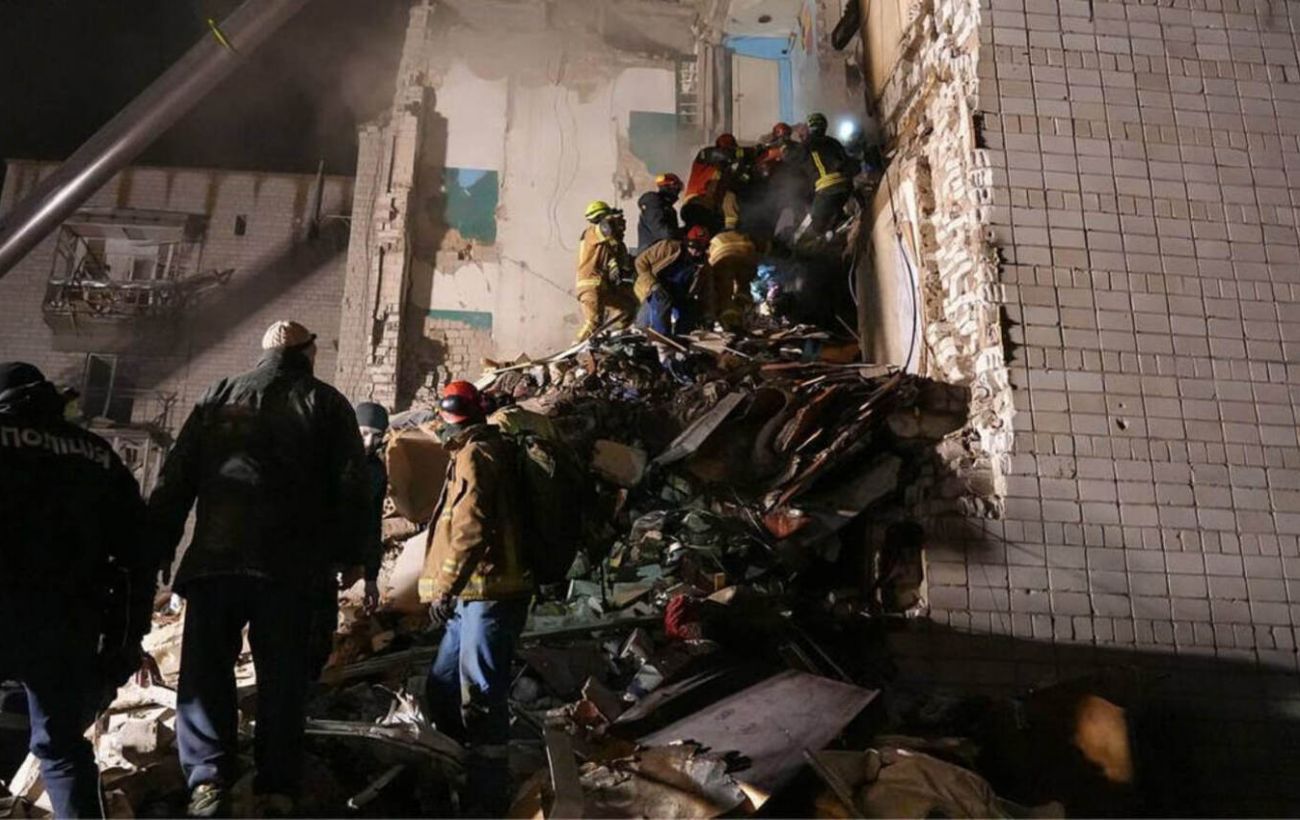
Tragedy in Dymer: Death toll from drone attack rises to six
Rescuers have recovered the body of another victim from the rubble of a five-story building in Dymer struck by a drone.
 🏛️Politics
British Minister Hamish Falconer harshly criticizes Putin and Trump’s stance
UK Minister Hamish Falconer called the Russian dictator a "butcher" and rejected any possibility of friendly relations with him, following recent comments by Donald Trump…
 ⚽Sport
Dramatic comeback: Barcelona overturns two-goal deficit against Villarreal
In a tense La Liga clash, Barcelona secured a comeback victory against Villarreal after a shaky start to the match.
 🚨Events
Shooting in Kharkiv: Police launch special operation following murder
Law enforcement officials in Kharkiv are investigating the circumstances of a man's death following a shooting incident on Sunday evening.
 🏛️Politics
US Considers Security Guarantees for Ukraine Modeled on NATO
The US administration is initiating talks on a new European security architecture, which may include security guarantees for Ukraine similar to NATO's Article 5.