Military Justice in Ukraine: Why Human Rights Defenders Warn Against Creating Special Courts
The debate on restoring military courts continues in Ukraine, but the «Pryncyp» human rights center urges focusing on civil judge specialization instead of creating a risky separate vertical.
 🚌Transport
Photo: Ukrainska Pravda
Key points
- The debate on military courts has intensified in the parliament.
- Human rights defenders highlight risks of losing independence via the command vertical.
- Civil judge specialization is proposed instead of creating new courts.
The issue of developing a military justice system has returned to the spotlight following the full-scale invasion. Currently, this topic is being actively reviewed by the Temporary Special Commission of the Verkhovna Rada of Ukraine, with the involvement of experts and human rights organizations. The main argument of those supporting the return of military courts is that defenders' cases should be reviewed solely by individuals with military experience.
Risks of Command Influence and Judicial Independence
However, specialists from the «Pryncyp» human rights center warn against hasty decisions. They emphasize that Ukrainian justice is based on impartiality, while military service relies on strict subordination and one-man command. The introduction of judges in military ranks inevitably raises the question of who assigns those ranks. Any potential influence by the Ministry of Defense or the General Staff creates a threat of direct interference in judicial activities.
Moreover, during the war, attempts were already recorded to increase criminal liability for military offenses specifically for subordinates while restricting judges' discretion. According to analysts, a serviceman whose case is reviewed by a court within the military vertical risks facing decisions influenced by commanders rather than the law.
Alternative Solutions
Human rights defenders believe civil judges are fully capable of objectively reviewing military cases, relying on the practice developed throughout the full-scale war. Where specialized knowledge is needed, legislation allows for the involvement of relevant experts.
As an optimal path, «Pryncyp» suggests introducing specialization among civil judges regarding offenses against the order of military service. This would improve the quality of decisions without risking the overall independence of the judiciary.
Source Ukrainska Pravda — pravda.com.ua/news/2026/11/20/8063800/ ↗
Read next
Million-dollar assets and estate near Kyiv: Journalists expose business empire of former tax official's family
Investigators revealed extensive assets and luxury real estate linked to the family of Yuriy Atamanyuk, a lustrated former tax police general from Viktor Yanukovych's era…
 🏛️Politics
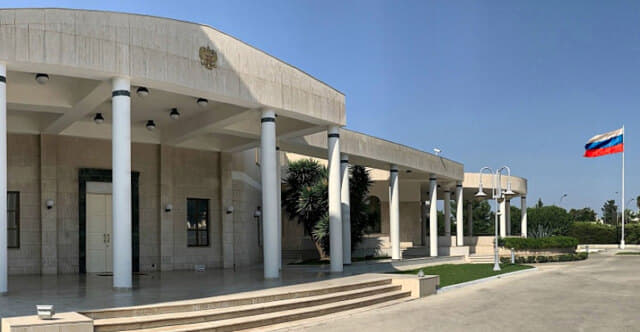
Cyprus expels Russian diplomats over espionage allegations
Cypriot authorities have expelled two Russian diplomats suspected of conducting intelligence activities and attempting to bypass EU sanctions.
 🏙️City
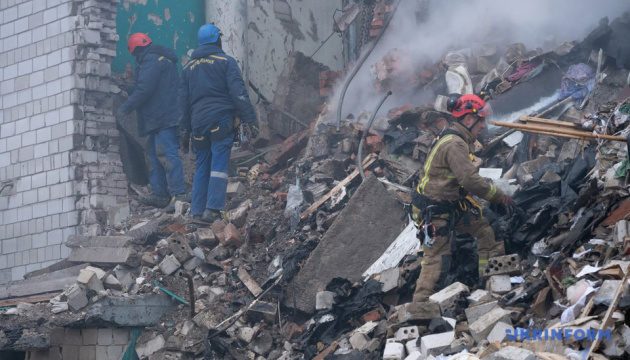
Child Rescued Alive from Rubble of Residential Building in Dymer
During search-and-rescue operations at a destroyed five-story building in Dymer, rescuers successfully pulled a child out alive.
 🏙️City
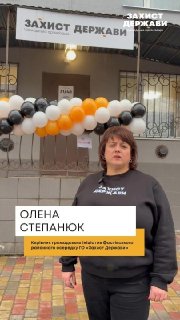
District office of the NGO «Zakhyst Derzhavy» starts operation in Fastiv
A new community center of the NGO «Zakhyst Derzhavy» has opened in Fastiv to provide legal, psychological, and social assistance. The office is located on Shevchenka Stre…
 🛡️Security
Russian Attack on Kyiv Region: One Dead and Several Injured in Bila Tserkva and Bucha Districts
As a result of a hostile shelling in the Kyiv region on November 22, one civilian was killed, and several others sustained injuries due to falling debris and housing dest…
 🇺🇦Ukraine
Czech Prime Minister Opposes Funding Ukraine within EU Budget
Czech Prime Minister Andrej Babiš has criticized the EU's draft long-term budget for 2028–2034, specifically objecting to financial support for Ukraine.